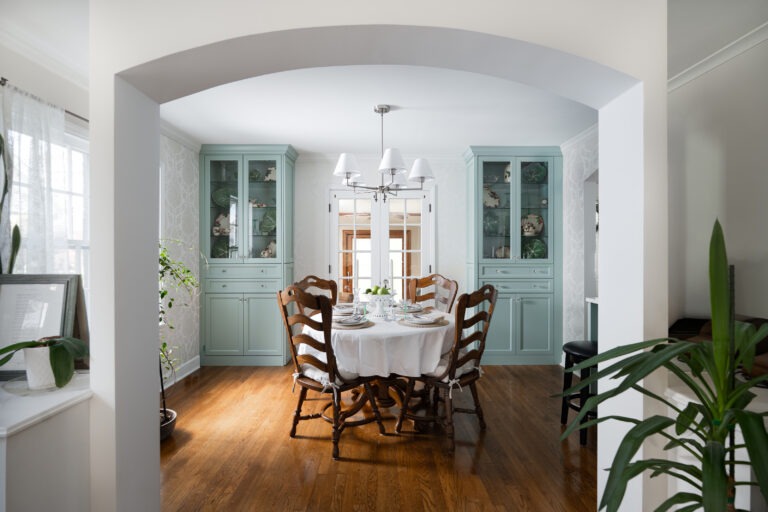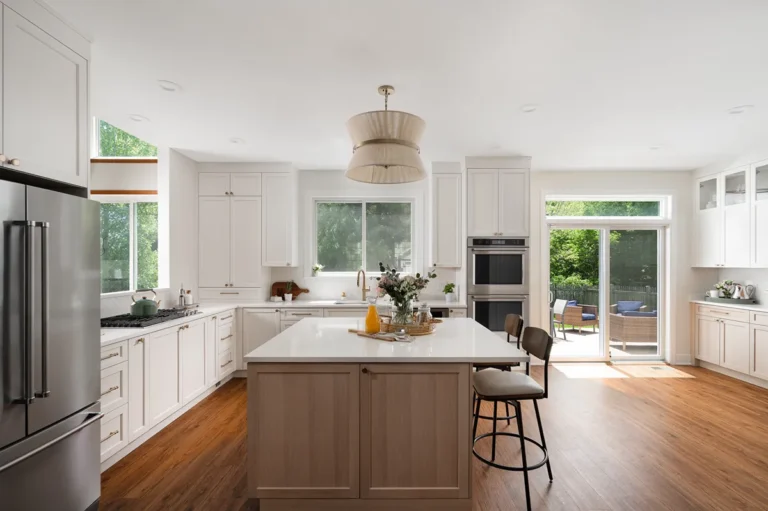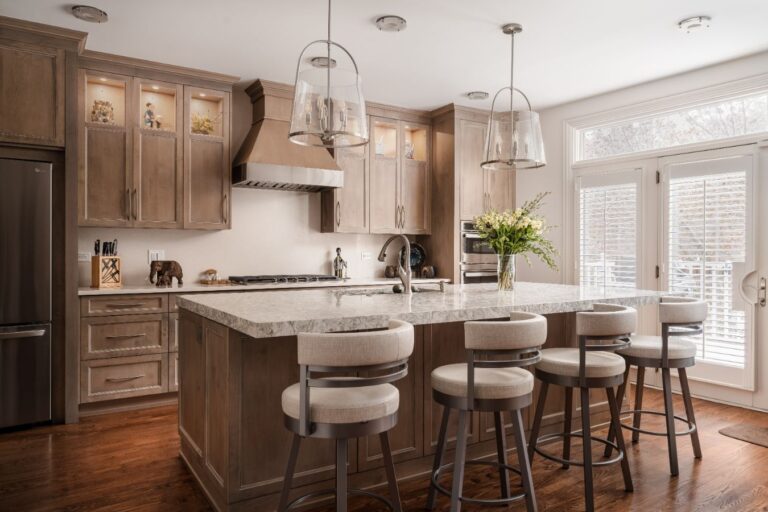

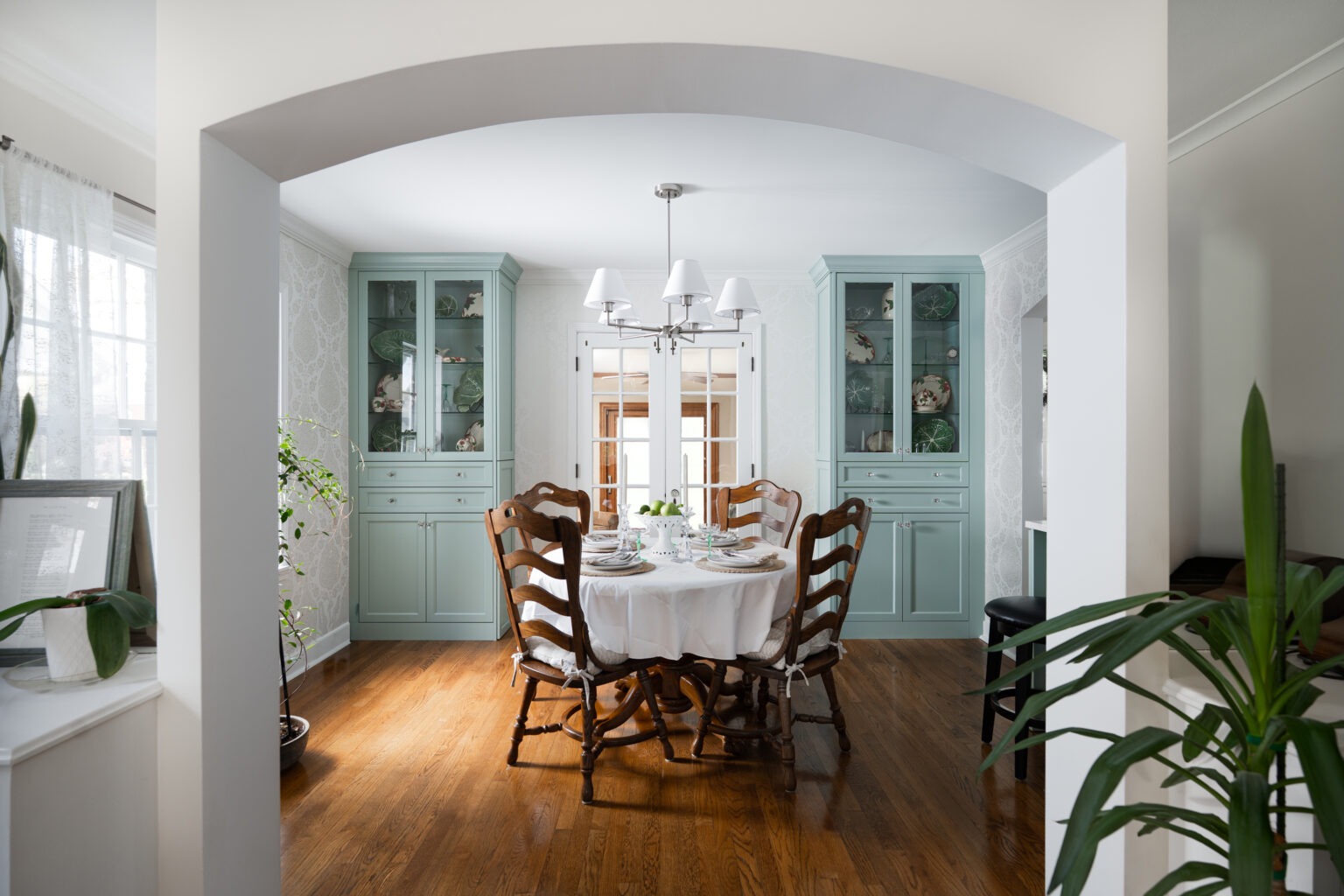
See The Glenview Farmhouse Revival Project
—
The decision to remodel an existing home has always been about more than construction. For many homeowners, it is about making the house they already own work better for the way they live while preserving the location, character, and investment they value.
Right now, there are some significant housing trends reinforcing that decision.
The 2026 State of the Nation’s Housing from Harvard University’s Joint Center for Housing Studies shows just how much the remodeling industry has changed. According to the report, homeowner improvement spending reached $376 billion in 2025, nearly matching the $419 billion spent on new single-family construction. Over the past decade, spending on owner improvements has increased 153%, compared with 90% growth in single-family construction. Remodeling now represents 41% of total U.S. construction spending, compared with 34% in 2015.
We see those broader trends reflected in the conversations we have with homeowners throughout Chicago’s North Shore. More people are looking at their existing homes differently. Instead of asking whether they should move, they are asking how they can transform the home they already have.
The Housing Market Is Giving Homeowners More Reasons to Stay
One of the clearest findings in the 2026 housing report is that homeowners are staying in their homes longer.
Existing home sales were only 4.1 million in 2025, near a 30-year low. At the same time, home prices have increased significantly since 2020, while today’s mortgage rates make giving up an older, lower-rate mortgage difficult for many homeowners.
For homeowners in the North Shore, the decision can be even more personal. A home may be in a neighborhood they love, close to family, schools, community connections, and everything else that made them choose the area in the first place.
Moving may solve some problems, but it can also mean giving up many of the things that made the current home worth owning.
That is where whole home remodeling can make sense. Rather than searching for a different property that may still require compromises, homeowners can rethink the house they already have.
Older Homes Need More Than Cosmetic Updates
The age of America’s housing stock is another important part of the story.
The median owner-occupied home in the United States is now 42 years old, up from 33 years in 2010. Owners of homes built before 1940 spend about 50% more annually on improvements and repairs than owners of newer homes.
This is particularly relevant in established North Shore communities, where many homes have decades of history behind them.
When we approach an older home, we are not simply looking at what needs a fresh coat of paint or a new finish. We consider how the home functions as a whole. That may mean rethinking the kitchen and adjoining living spaces, updating bathrooms, improving storage, addressing outdated systems, or making larger changes to the floor plan.
A whole home remodel gives us the opportunity to consider those pieces together instead of treating each room as an isolated project.
Our goal is to create a home that feels cohesive, functional, and appropriate for the property while addressing the needs that come with an older house.
Whole Home Remodeling Can Be a Smarter Long-Term Investment
When several areas of a home need attention, remodeling them together can have practical advantages.
At Glenbrook Remodeling, we often work with homeowners who need more than one room remodeled. Taking on multiple spaces as part of a coordinated whole home project can be more efficient than completing separate projects years apart. It also means homeowners only have to live through one major construction period rather than repeatedly disrupting their home.
That does not mean every homeowner needs to remodel everything at once. The right scope depends on the property, the family’s goals, and the investment they are comfortable making.
What matters is having a clear understanding of the bigger picture.
A kitchen remodel, for example, may affect adjacent dining or living areas. A bathroom renovation may involve plumbing or electrical work that connects to other parts of the house. Changing a floor plan can affect structural elements, mechanical systems, lighting, and finishes throughout multiple rooms.
Planning those relationships from the beginning helps us create a more cohesive project.
Planning Matters More When the Project Gets Bigger
A whole home remodel involves many decisions, and those decisions are interconnected.
That is why our design-build approach starts with planning rather than construction. We begin with a consultation to understand the project and establish a preliminary budget range. Once we determine that we are a good fit, we develop the design, scope of work, material selections, and a realistic budget before moving into construction.
Our designers, architects, project managers, and trades professionals work as one team. We manage the process from design and budgeting through permits, construction, and warranty, giving homeowners a single point of accountability throughout the project.
For a large-scale project, that coordination matters.
We also put considerable effort into the design phase because we want homeowners to understand what they are investing in before construction begins. Our process includes detailed planning, material selections, and 3D color renderings that allow homeowners to visualize their new spaces before we build them.
That level of preparation helps create a fixed-cost project and reduces the surprises that can make a major remodel stressful.
Designing for the Home You Want to Live In
The growing demand for remodeling is not only about housing prices and mortgage rates. It is also about how people want to live.
The 2026 housing report points to another long-term trend: the growing need for homes that accommodate aging homeowners. The population age 65 and older grew from 48 million to 65 million between 2015 and 2025 and is projected to reach 71 million by 2030. More than half of professional remodelers were involved in aging-in-place modifications in 2024.
For us, that reinforces the importance of thinking beyond today’s needs.
A well-planned whole home remodel can incorporate improved accessibility, better circulation, more usable storage, updated systems, and spaces that can adapt as a household changes. It can also preserve the architectural character homeowners value while making the home more comfortable and functional.
A Different Way to Think About Remodeling
The broader housing market suggests that remodeling is no longer simply an alternative to moving. For many homeowners, it is a deliberate investment in the property they have chosen to keep.
We have built our approach around that idea.
Glenbrook Remodeling is a family-owned, boutique design-build firm serving Chicago’s North Shore since 2005. We believe homeowners deserve individualized attention, honest communication, thoughtful design, and a remodeling process that is organized from beginning to end.
Our whole home remodeling services bring design, planning, permitting, construction, and project management together under one team. That allows us to look at the house as a whole and help homeowners make decisions that support both the immediate project and the long-term life of the home.
The housing market may be giving homeowners more reasons to stay put. For us, the more important question is what that home can become.
If your North Shore home has the right location, the right character, and the right potential, a thoughtful whole home remodel may allow you to create the home you’ve been looking for without leaving the one you already love.
—
Contact us today to get started on your remodeling project.